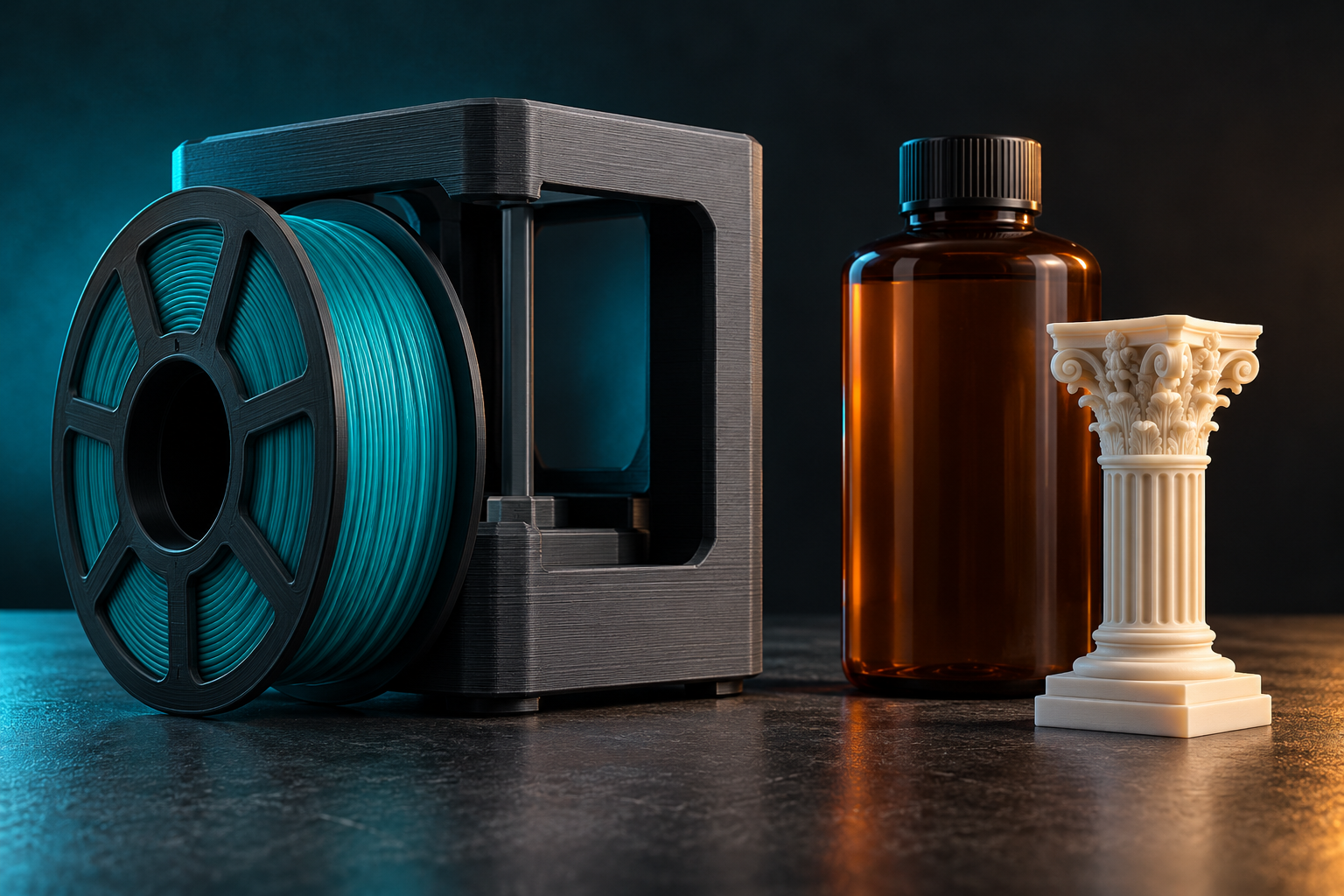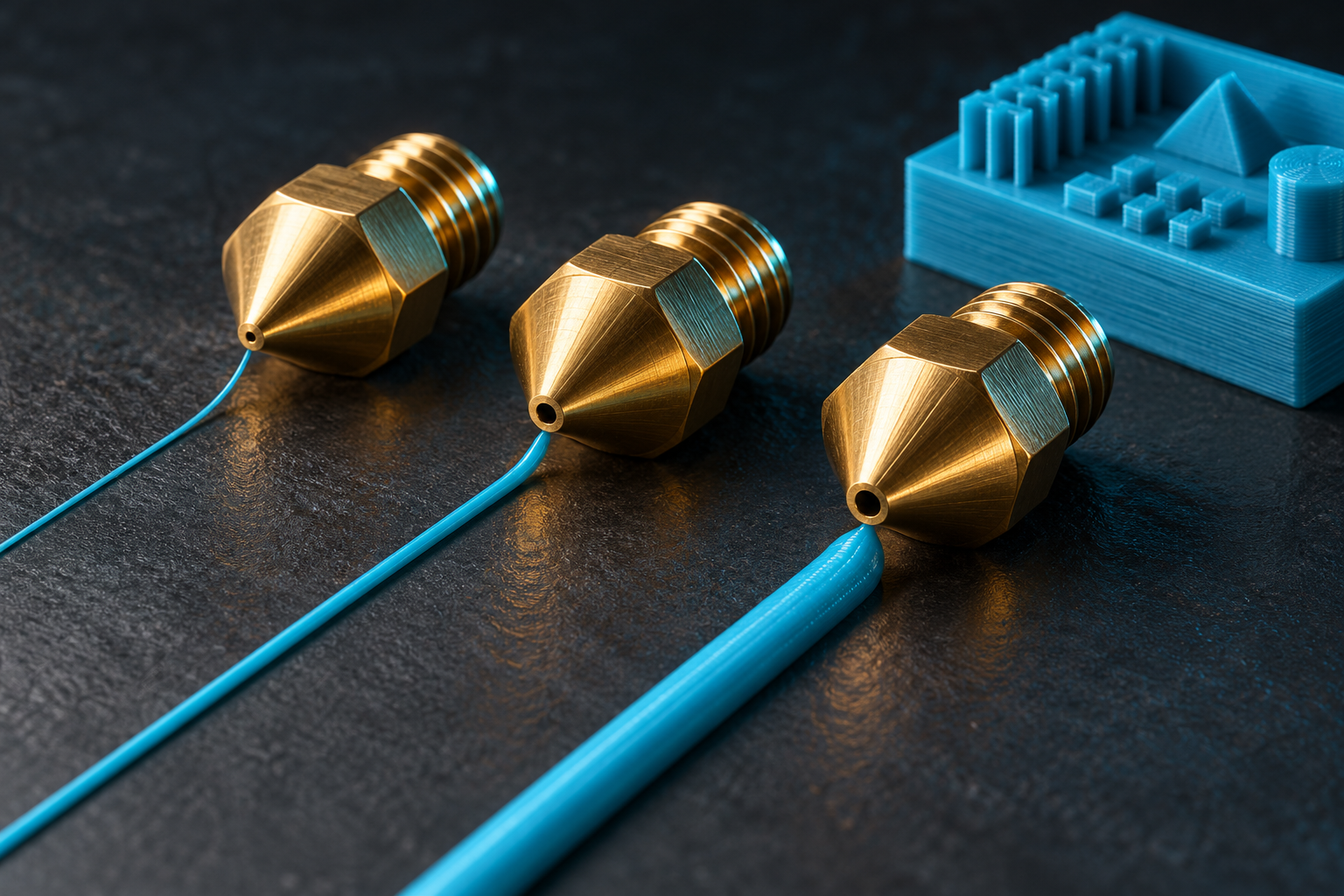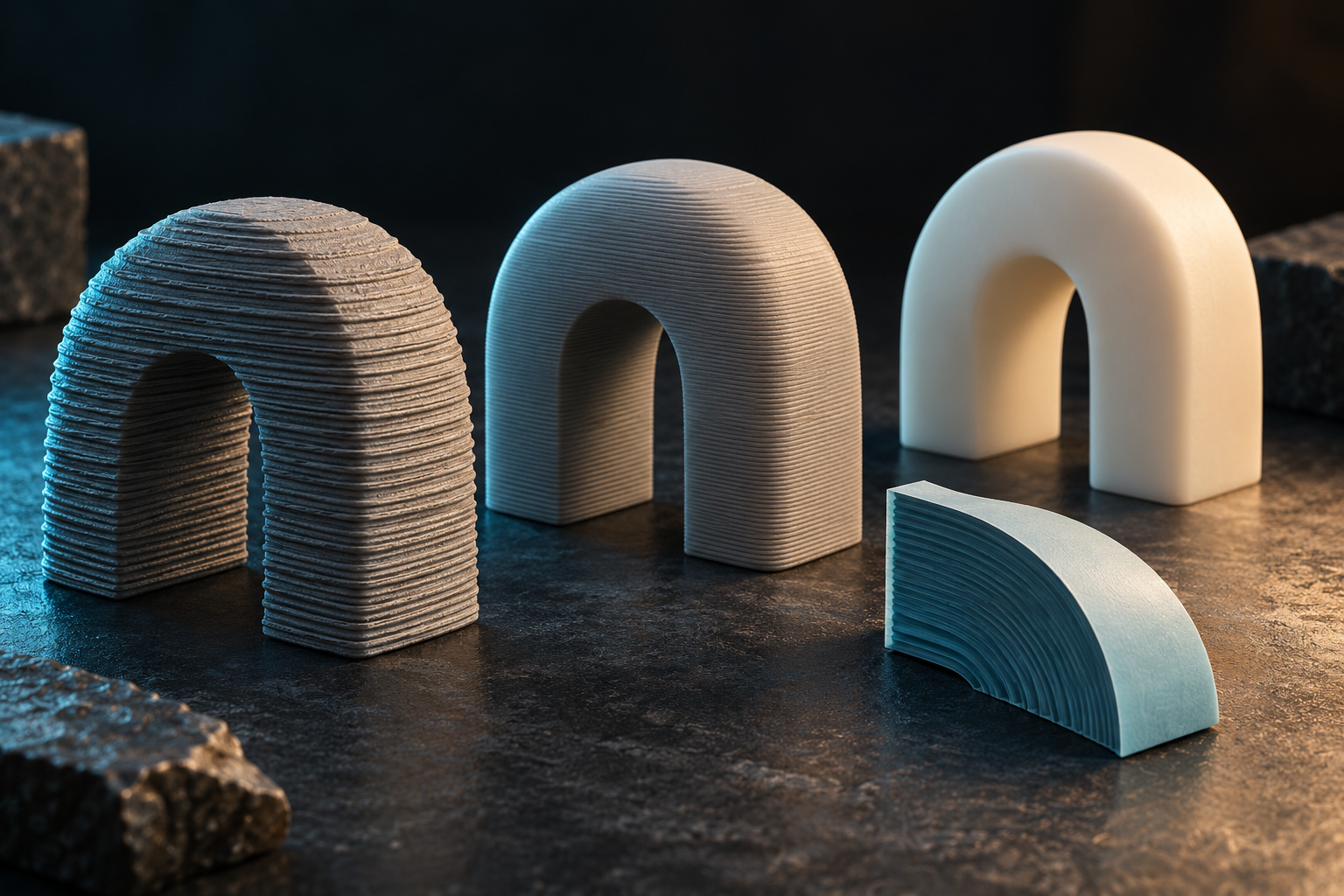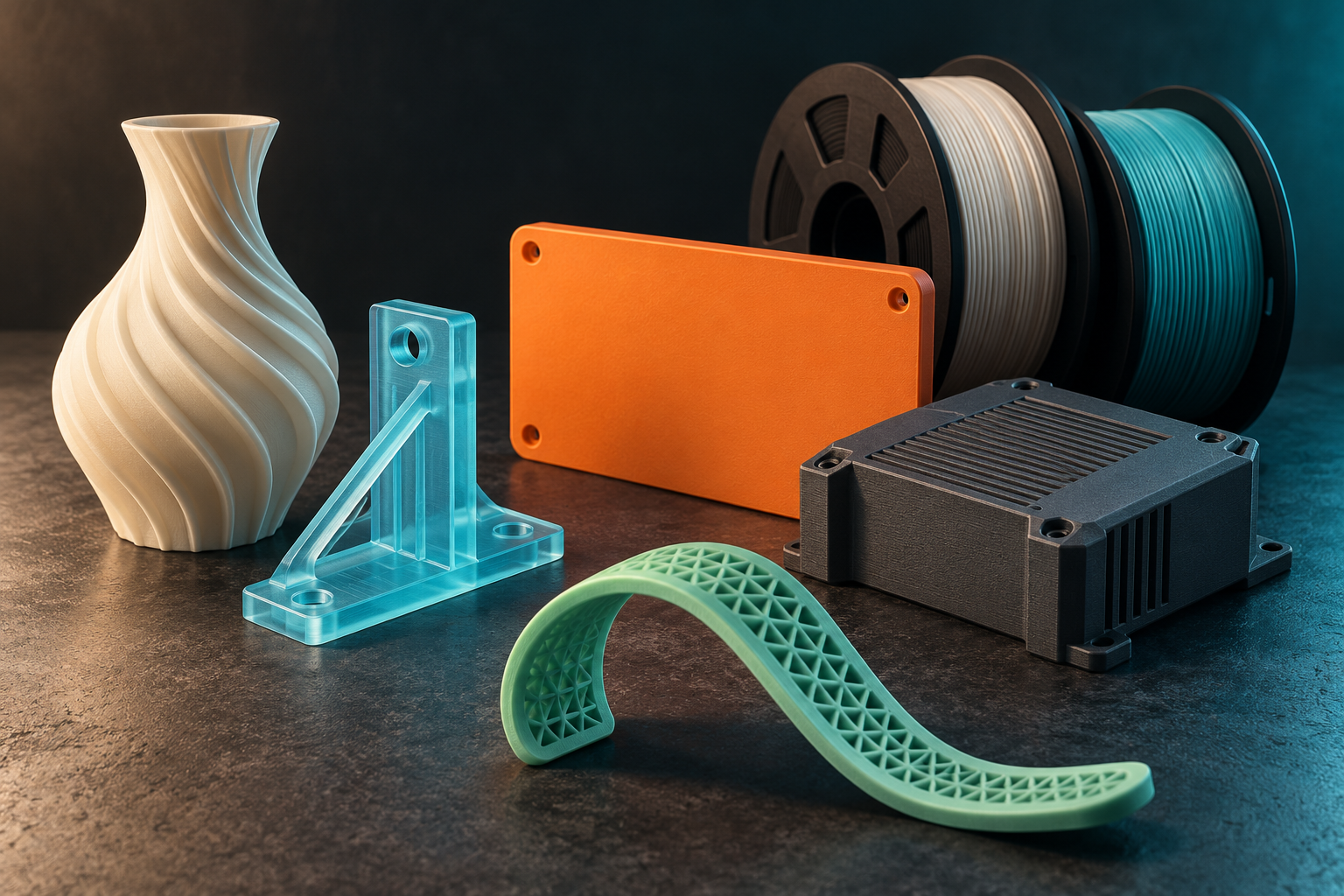
For an indoor display piece, start by considering PLA. Discuss PETG for practical parts, ASA for outdoor exposure, and TPU when flexibility is the goal. The best material depends on the job.
What is the best 3D printing material for my part?
A desk organizer, an outdoor sign and a flexible bumper ask different things of a material. Before choosing, describe heat, sunlight, repeated bending, impact and how the part attaches to other objects. “Strong” could mean stiff, difficult to break, or able to bend many times. Those are different requirements.
For a first quote, a photo of the installation and a short sentence about the intended use are often more useful than a long list of printer settings. We can review the material choice with you.
PLA vs PETG vs ASA vs TPU: a quick comparison
These are starting points for a conversation, not guaranteed performance ratings. The exact brand, geometry and printing process affect the finished part.
| Material | A useful starting point for | What to discuss |
|---|---|---|
| PLA | Indoor decor, gifts and appearance models | Heat exposure; a parked car can be a poor environment. |
| PETG | Practical housings, holders and everyday parts | Required stiffness, fit and the surface finish you expect. |
| ASA | Outdoor signs and housings exposed to sunlight | Size, heat and mounting requirements. |
| ABS | Functional housings when ABS is specified | Whether ASA is a better fit for outdoor use. |
| TPU | Flexible grips, bumpers and protective pieces | How soft it should feel and how much it must bend. |
Is PLA good for 3D printed gifts and home decor?
PLA is a useful choice when appearance, crisp detail and easy production matter more than heat resistance. Many indoor display pieces do not need an engineering polymer. A more expensive material does not automatically make a more attractive print.
If your design will sit next to a heat source or stay outdoors, tell us before ordering. We may recommend another material or a change to the geometry.
Which plastic should I use for outdoor or flexible parts?
PETG is a common option for practical parts that need more toughness than a basic decorative print. ASA is a useful candidate for weather exposure because of its UV resistance. Neither choice removes the need to check the shape, load and attachment points.
TPU describes a family of flexible materials. A thick TPU wall can feel much firmer than a thin wall made from the same spool. Share whether you want a soft pad, a bendable strap or a resilient protective shell, rather than selecting by color alone.
How do I request a custom 3D print?
You do not need to know every material name. If you are unsure, tell us in your request and include the information below. For a functional part, a sample or test print may be the best next step.
- Where it will be used: indoors, outdoors, in a car or near equipment.
- What touches it: screws, clips, moving parts or other materials.
- What it must do: hold its shape, flex, resist knocks or simply look good.
- Your preferred color, quantity and any dimensions that must fit.
Questions before you order
Is PETG stronger than PLA?
It depends on what “stronger” means. PETG is often a useful choice when toughness matters; PLA can be useful when stiffness and appearance matter. The part’s shape, print orientation and exact filament matter too. Describe the load and how the part could fail.
What is the best filament for outdoor use?
ASA is a useful starting point for an outdoor sign or housing because of its UV resistance. Sunlight, temperature, mounting and load still need review. Tell us whether the part will stay outside year-round or only be used outdoors occasionally.
Will PLA melt in a hot car?
A PLA part can soften or deform before it melts. Do not choose ordinary PLA for a hot-car application based on its melting temperature alone. Share where the part will sit and the temperatures it may experience so we can review another material.
Can you 3D print flexible parts with TPU?
Yes, TPU can be used for flexible grips, bumpers and similar parts. Its hardness and the wall thickness both affect how the finished piece bends. Describe the feel and amount of movement you need; a sample may help settle the design.
Plan your project
Compare available 3D printing materials →Custom 3D printed replacement parts →Further reading
Manufacturer references behind this guide. Material availability and the right setup are confirmed for each project.
Prusa: PLA material guide ↗Prusa: PETG material guide ↗Prusa: ASA material guide ↗Prusa: flexible materials ↗